When the Range Rover entered the courtyard, I flew outside. For the first time in our relationship, Matthew didn’t beat me to the door. He was still straightening his long legs when my arms locked around his neck, my toes barely touching the ground.
“Don’t do that again,” I whispered, my eyes shut against sudden tears.
This chapter is heavy on emotion, but light on material to start my usual research trails. In lieu of trivia, therefore, I present you with a few atmospheric autumnal playlists to accompany your wistful sighs.
For starters, LOOK AT THIS LITTLE NUGGET OF A DEER. I couldn’t resist its soft ears and squinty eyes.
Okay.
Now, we hunt with Ysabeau.
Chapter 24
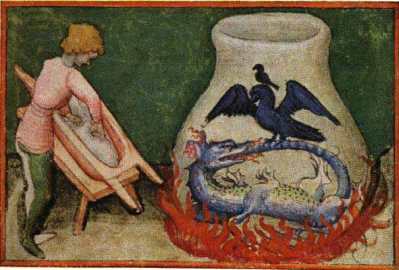
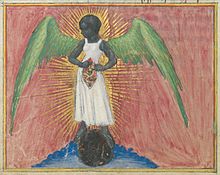
Turning to my computer, I typed notes about the imagery my anonymous author had used to describe nigredo, one of the dangerous steps in alchemical transformation.
Diana’s reading refers to the Magnum Opus, or Great Work, of alchemy — using prima materia to create the philosopher’s stone. There are four original phases: nigredo, blackening; albedo, whitening; citinitas, yellowing; and rubedo, reddening. Alchemists sometimes expanded the sequence to include other stages – seven, twelve, fourteen… There’s a short video on the Magnum Opus here. The four stages correspond to the four elements (earth, water, wind, and fire) and qualities (hot, cold, dry, moist). This excerpt from themystica.com offers a good explanation:
The blackness symbolized the initial state of chaos or prima materia, prime matter. Out of this prime mater came everything. On this rest the theory of the conjunction, union, of things, such as the union of opposites, or male and female. Within this union of metals there was the assumption that the based metal dies and the more precious one was resurrected. Or it was thought to come back as a thing of many colors, sometimes described as a peacock’s tail. Eventually this hypothesis led to the adoption of the color of white which was considered to contain all colors. Here the first main goal of the process was reached, the metal had changed to its silver or moon state, which many alchemists considered the final goal; but it was not, because the metal still has to be elevated to its gold or sun state. The albedo is, allegorically speaking, the daybreak, but not until the rebedo is reached is there sunrise; this is the extra step required. Originally the transition from albedo to rebedo was accomplished by citrinitas that was later omitted. This was done in a very high intense fire. The red and white are the King and Queen who, at this stage, celebrate their “chemical wedding.”
“Parsley. Ginger. Feverfew. Rosemary. Sage. Queen Anne’s lace seeds. Mugwort. Pennyroyal. Angelica. Rue. Tansy. Juniper root.” I pointed to each one in turn.
The following paragraph contains mild spoilers.
Marthe’s tea is a hodgepodge of herbal birth control methods. Before continuing with this discussion, I find it necessary to say that I am not an advocate for or against herbal birth control. Basically, kids, don’t come at me about the effectiveness or ineffectiveness of various and sundry methods of planning for or preventing pregnancy.
Here is a smattering of information about the herbs in Marthe’s tea:
Rosemary: This one may surprise you, but making a rosemary tea could induce menstruation (the herb is an emmenagogue). If taken in large doses, rosemary also acts as an abortifacent.
The history of contraception is fascinating. As this Jezebel article notes, abortifacent herbs appear in texts dating to the 11th century. Mental Floss collected nine different forms of birth control used in the ancient world. Did you know that acacia gum acts as a spermicide? I didn’t. Prior to the nineteenth century, pregnancy wasn’t considered to “begin” until quickening or “ensoulment,” when a mother feels the fetus move inside the womb. Herbal contraceptives can be terrifying, and dangerous. Whatever Marthe’s intentions, I am inclined to agree with Sarah that she shouldn’t have given the tea to Diana without an explanation.
Silently I read the accompanying text, translating the Latin into English: “Turn to me with all your heart. Do not refuse me because I am dark and shadowed. The fire of the sun has altered me. The seas have encompassed me. The earth has been corrupted because of my work. Night fell over the earth when I sank into the miry deep, and my substance was hidden.”
“Mark 16, Psalms 55, and Deuteronomy 32, verse 40.” Matthew’s voice cut through the quiet, spouting references like an automated bible concordance.
Matthew’s cited verses, presented without further comment:
Mark 16
When the Sabbath was over, Mary Magdalene, Mary the mother of James, and Salome bought spices so that they might go to anoint Jesus’ body. Very early on the first day of the week, just after sunrise, they were on their way to the tomb and they asked each other, “Who will roll the stone away from the entrance of the tomb?”
But when they looked up, they saw that the stone, which was very large, had been rolled away.As they entered the tomb, they saw a young man dressed in a white robe sitting on the right side, and they were alarmed.
“Don’t be alarmed,” he said. “You are looking for Jesus the Nazarene, who was crucified. He has risen! He is not here. See the place where they laid him. But go, tell his disciples and Peter, ‘He is going ahead of you into Galilee. There you will see him, just as he told you.’”
Trembling and bewildered, the women went out and fled from the tomb. They said nothing to anyone, because they were afraid.
Psalms 55
Give ear to my prayer, O God; and hide not thyself from my supplication.
Attend unto me, and hear me: I mourn in my complaint, and make a noise;
Because of the voice of the enemy, because of the oppression of the wicked: for they cast iniquity upon me, and in wrath they hate me.
My heart is sore pained within me: and the terrors of death are fallen upon me.
Fearfulness and trembling are come upon me, and horror hath overwhelmed me.
And I said, Oh that I had wings like a dove! for then would I fly away, and be at rest.
Lo, then would I wander far off, and remain in the wilderness. Selah.
I would hasten my escape from the windy storm and tempest.
Destroy, O Lord, and divide their tongues: for I have seen violence and strife in the city.
Day and night they go about it upon the walls thereof: mischief also and sorrow are in the midst of it.
Wickedness is in the midst thereof: deceit and guile depart not from her streets.
For it was not an enemy that reproached me; then I could have borne it: neither was it he that hated me that did magnify himself against me; then I would have hid myself from him:
But it was thou, a man mine equal, my guide, and mine acquaintance.
We took sweet counsel together, and walked unto the house of God in company.
Let death seize upon them, and let them go down quick into hell: for wickedness is in their dwellings, and among them.
As for me, I will call upon God; and the Lord shall save me.
Evening, and morning, and at noon, will I pray, and cry aloud: and he shall hear my voice.
He hath delivered my soul in peace from the battle that was against me: for there were many with me.
God shall hear, and afflict them, even he that abideth of old. Selah. Because they have no changes, therefore they fear not God.
He hath put forth his hands against such as be at peace with him: he hath broken his covenant.
The words of his mouth were smoother than butter, but war was in his heart: his words were softer than oil, yet were they drawn swords.
Cast thy burden upon the Lord, and he shall sustain thee: he shall never suffer the righteous to be moved.
But thou, O God, shalt bring them down into the pit of destruction: bloody and deceitful men shall not live out half their days; but I will trust in thee.
Deuteronomy 32:40
For I lift up my hand to heaven, and say, I live for ever.
Moments later a silver banner rose over the top of the building in the village and a bell began to toll. Men and women slowly came out of houses, bars, shops, and offices, their faces turned towards Sept-Tours, where the ancient symbol of eternity and rebirth snapped in the wind.
Nothing but the color red appeared at first. Then the red took on a texture, strands of red burnished here and there with gold and silver. The texture became a thing–hair, Sarah’s hair. My fingers caught the strap of a backpack from my shoulder, and I dropped my lunch box on the lfoor o fthe family room with the same officious clatter as my father when he dropped his briefcase by the door.
In Chapter 22, as Matthew threatens to leave and give up on Diana, she begins to have visions. It’s pretty clear to me that the visions have a theme–loss. Specifically, the loss of love and family. I don’t know whether vision symbolism is related to dream symbolism, but I thought it’d be fun to play with the things that Diana sees as she goes in and out of her visions. All of these snippets come from Dreammoods.com and Dreambible.com.
Armor: To see armor indicates insecurity. You are worried about your well being.
Bow and Arrow: A combination of male and female energies, anger, aggression, tension,
Now that he’d left, I was terribly aware of his absence. As I sat on the roof of the watchtower, my tears softened my determination to fight for him. Soon there was water everywhere. I was sitting in a puddle of it, and the level just kept rising.
It wasn’t raining, despite the cloudy skies.
The water was coming out of me.
Despite my research, it would appear that the concepts of witchfire, witchwind, and witchwater are all products of Deb’s imagination. I cannot find any reference to myths about those three powers, but I’d be curious if someone else did.
“Here you go, baby,” I said, holding it out on a flat palm. Matthew watched warily as Balthasar extended his neck and reached with delicate lips to pick the fruit from my hand. Once it was in his mouth, he looked at his owner triumphantly.
In Chapter 18, we learned that Matthew and his mother keep horses – specifically, Percherons and Andalusians. Like myself, Deb is a bit horse-crazy. She has a lovely beastie named Romeo who features regularly on her Instagram account. He is a goofball.
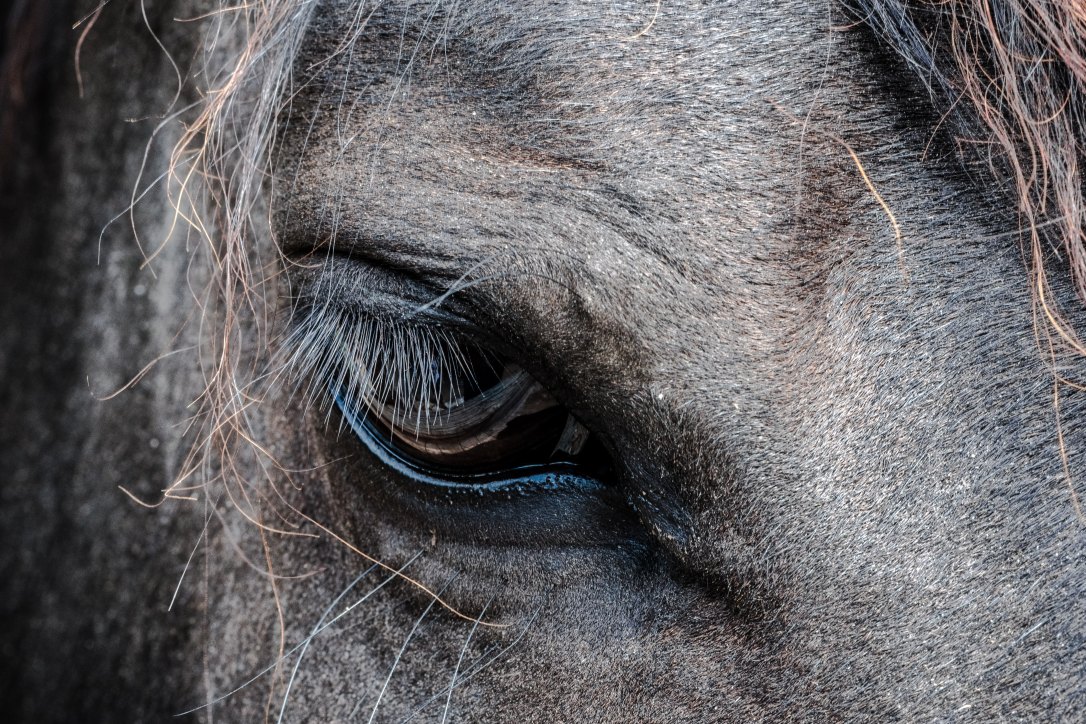
Rakasa and Fiddat are described as Andalusians, or Pura Raza Española. Andalusian horses are known for their fine heads, arched necks, long manes, deep chests, and rounded hindquarters. Andalusians are athletic animals with a very classical build; they’re especially well-suited to dressage, a complicated and lovely discipline based on anicent cavalry maneuvers. Full disclosure: I ride dressage, and you can hear me gab about it on our other podcast, Queens of All Trades. The episode is called Ride Fancy. You can see Andes at work in the following video:
“What kind of horse is Dahr?” I asked, noticing his equally smooth gait.
“I suppose you’d call him a destrier,” Matthew explained. That was the mount that carried knights to the Crusades. “He was bred for speed and agility.”
If you were so inclined, you could hire the company Destrier to provide cavalry for battle re-enactments. As war horses, destriers had dense bodies, broad backs, strong hindquarters, and long legs.You can watch people joust on destrier-like horses here.
“My muscles will be sore tomorrow,” I said, groaning. “I haven’t been on a horse for years.”
“Nobody would have guessed that from the way that you rode today,” he said.
Prior to getting on Rakasa, Diana dons a great deal of gear, including a protective riding vest. As much as I love Deb–and I do–this is a chapter where I get rather cranky and call a tiny bit of BS. Then, I tell myself that truth is no defense for fiction and if Deb wants a world where riding boots fit immediately (they don’t) and you can bounce right back into excellent riding form (you can’t), then that is all well and good and she’s allowed to do that. After all, it would detract from the romance if Diana was like, “As it turned out, I hadn’t ridden in over ten years and I felt like a sack of potatoes. Matthew laughed at me, returned Rakasa to the stables, and got me a pony upon whom to have a lunge lesson while he schooled my position.”
In the name of keeping this post light, I’m skipping the Aurora Consurgens and Origins, for now. After reading and studying, Matthew and Diana descend the tower in order to dine with Marthe and Ysabeau.
Make the coffin of a great pie or pastry, in the bottome thereof make a hole as big as your fist, or bigger if you will, let the sides of the coffin bee somewhat higher then ordinary pies, which done put it full of flower and bake it, and being baked, open the hole in the bottome, and take out the flower. Then having a pie of the bigness of the hole in the bottome of the coffin aforesaid, you shal put it into the coffin, withall put into the said coffin round about the aforesaid pie as many small live birds as the empty coffin will hold, besides the pie aforesaid. And this is to be done at such time as you send the pie to the table, and set before the guests: where uncovering or cutting up the lid of the great pie, all the birds will flie out, which is to delight and pleasure shew to the company. And because they shall not bee altogether mocked, you shall cut open the small pie, and in this sort you may make many others, the like you may do with a tart. (From Epulario, 1598)
It… would not be to my taste.
“What was that?” I asked.
“It started out as a tarantella,” Matthew said, escorting his mother back to her chair, “but Maman never can stick to one dance. So there were elements of the volta in the middle, and we finished with the minuet, didn’t we?”
This is the song that Ysabeau and Marthe sing to Diana:
I tried–in vain–to find a recording of the song Matthew sings to Diana. You’ll have to imagine it.
Tomorrow, we meet Domenico Michele and move more firmly into Act II of the book. If you’d like to hear what the daemons have to say, their episode is here.
“Then I don’t suppose you would be interested in seeing my fourteenth-century copy of Aurora Consurgens. It’s French, regrettably.”
Matthew lures Diana to France by promising her a first crack at a rare manuscript. We’ll talk more about the Aurora Consurgens later, but it’s worth an introduction now. The AuroraConsurgens is in fact a well-known alchemical treatise of the 15th century. Though it was once attributed to Thomas Aquinas, it’s now thought to be the work of an author called Pseudo-Aquinas. We’ll return to the manuscript in a few chapters, when Diana begins work on its imagery and poetry. In the meantime, you might be interested in the Easter egg buried in Chapter 18 – the discussion of the female enlumineresse, or illuminator, Bourgot le Noir. Sure enough, Bourgot le Noir was the daughter of the illuminator Jean le Noir, who lived in the 14th century. The Metropolitan Museum of Art has a series of essays relevant to her work linked here. You can see examples of the le Noir family’s work here.
In the center of rolling hills was a flattened peak dominated by a crenellated hunk of buff and rose stone. Seven smaller towers surrounded it, and a turreted gatehouse stood guard in front. This was not a pretty, fairy-tale castle made for moonlit balls.
In the Real-Time Reading Companion, Deb notes that Sept-Tours is based on Chateau Dauphin, a castle in the Puy-de-Dômedépartement of France. It was initially built in the twelfth century and augmented through the fifteenth. The family who owns the chateau renovated it in the eighteenth century. There are some lovely interior photographs of the chateau on Chateaux Medievaux.
Should you find yourself in France, Chateau Dauphin is open to the public. Deb posted a lovely drone video of the chateau in her Real-Time Reading post for 6 October.
Chapter 18
Matthew launched into a volley of something unintelligible that sounded like a cross between French, Spanish, and Latin.
Tomorrow, we’ll ride. The Daemons discuss Chapter 17 in Take 17! If you’re hungry for more, you should check out the Tenth Knot, or shoot us an e-mail at chamomileandclovecast@gmail.com.





 Analytical psychology seeks to bring together the conscious and unconscious parts of the mind and asks patients to

 We’ll talk more about the Aurora Consurgens later, but it’s worth an introduction now.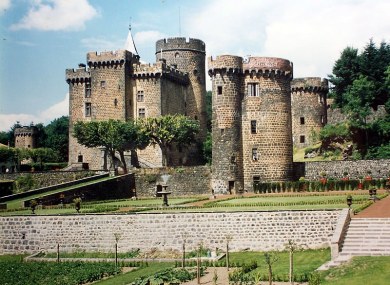

 Chamomile & Clove