We hope this finds you well and safe on a gorgeous Sunday morning.
At the outset of this episode, we’re taking a couple of moments to talk about the #BlackLivesMatter movement and how we’re working on dismantling racism in our lives outside the podcast and what that means for our podcast work going forward. We’re committed to you, our listeners, to truly intersectional feminism, and to learning (and forking up) in public. There may or may not be some of that in this episode — but here we go anyway.
In this episode, we’re talking about Chapters 3, 5, and 8 of Time’s Convert. It’s partially about awkward transitions (wee), defensive cocktails, and parenting and blind panic (we see you, Diana), but it’s also about decolonizing history, authorial and audience expectations, and what happens when you transition from a trilogy to a Very Different Book in the same universe.
You can find us — as usual — at chamomileandclovecast@gmail.com or on Twitter @chamomilenclove. You can also find us on Facebook and in our Facebook group, the Chamomile and Clove Clovers.
In today’s Real-Time Reading, we’re getting the eff out of Prague — and with good reason. The timing of these chapters is a bit curious, as we’re supposed to have Rudolf’s musical fiasco on 10 April and escape Prague on Walpurgis Night, which takes place on 30 April. I note this only because I’m unclear on when to publish this segment in our RTR journey — but we’re going to roll with it. It’s also possible that we’re playing with our funky 16th century European calendars again, so it probably all makes sense somewhere. Onward — to bonfires and vegetable portraits!
“The humans’ Dracula–the Dragon’s son known as the Impaler–was only one of Vlad’s brood,” Matthew explained.
“The Impaler was a nasty bastard. Happily, he’s dead now, and all we have to worry about are his father, his brothers, and their Bathory allies.” Gallowglass looked somewhat cheered.
If you wanted to, you could take a tour following the life of the “Blood Countess” in Slovakia. Tell me about it afterwards; I’ll wait right here.
“I want us all as far from Prague as possible by the time the sun rises,” Matthew said grimly. “Something is very wrong. I can smell it.”
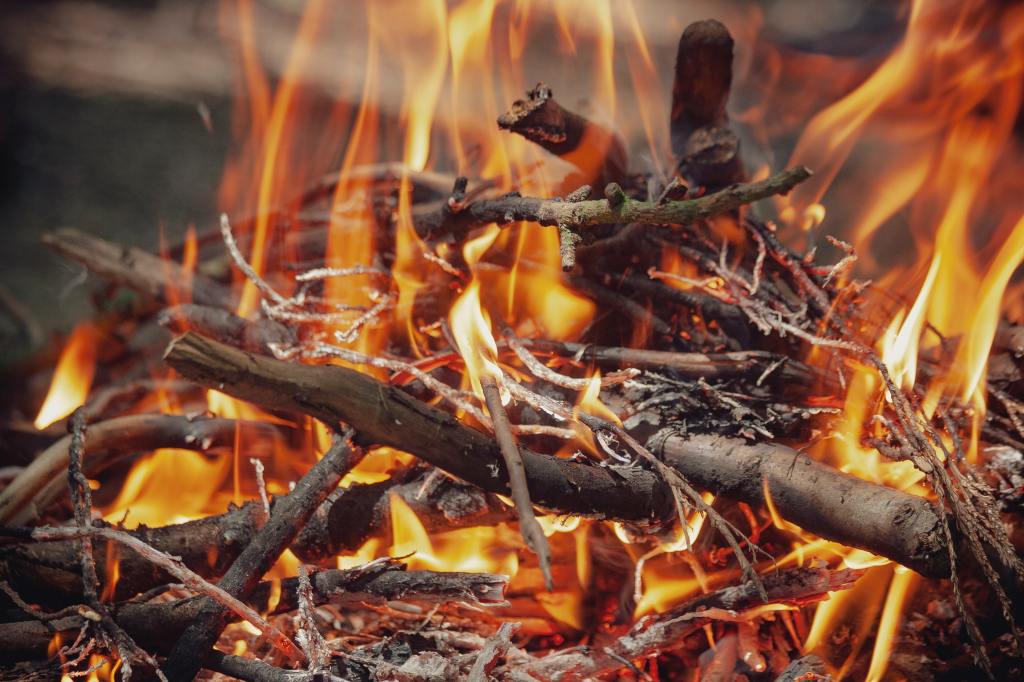
“That may not be such a good idea. Do you not know what night it is?” Gallowglass asked. Matthew shook his head. “Walpurgisnacht. They are lighting bonfires all around the city and burning effigies of witches — unless they can find a real one, of course.”
The Czech festival of Čarodějnice, or Walpurgis night, uses effigies of the pagan goddess Morana to show that the people are sick of winter and ready for spring. Celebrants make witch figures, burn them, and spread the ashes over bodies of water… unless, as Gallowglass notes, the celebrants of certain centuries found an actual human to burn.
According to the video below (filmed, delightfully, in Czech!), celebrating Walpurgis Night involves building large bonfires, shooting rifles and cracking whips to scare off evil spirits, and ritualistically throwing torches over large fires to symbolize the evil spirits warded off by holy fire. There’s also some business about cherry trees and kissing and fertility that seems intriguing.
As many of you likely know, May 1 is sacred and celebrated in many cultures. In the Celtic tradition, May 1 is Beltane, a festival that celebrates the return of the summer (and the fertile seasons) with bonfires. Like Walpurgis Night, Beltane marks the turn of the seasons and the cleansing power of fire to bless crops and livestock, ward off evil, and its reminder of the long, warm days to come in summer.
“Matthew’s father beat him with a sword once. I saw it.” The firedrake’s wings fluttered softly within my rib cage in silent agreement. “Then he knocked him over and stood on him.”
“He must be as big as the emperor’s bear Sixtus,” Jack said, awed at the thought of anyone conquering Matthew.
It’s hard, in the age of the terribly-disturbing Tiger King, to imagine Rudolf II as anything other than a very strange man with a very large ego who derived some sort of pleasure in ripping animals (and items) from their homelands for his pleasure. This fascinating article describes “three Rudolfs” visible from history:
“1. the feeble, unstable, and impoverished monarch who began his reign by succeeding to a glamorous political inheritance but ended it a prisoner in his own castle, powerless in the Empire, evicted from Austria and Hungary, deposed even in Bohemia, where he was forced to endure the coronation tumult of his detested brother; 2. The second Rudolf is a great Maecenas, the protector of the arts and sciences, of Arcimboldo and Spranger, Kepler and Tycho Brahe (Maecenas – cultural minister at the time of Octavian); 3. The third Rudolf is different again, and seemingly much less edifying. He is a notorious patron of occult learning, who trod the paths of secret knowledge with an obsession bordering on madness.”
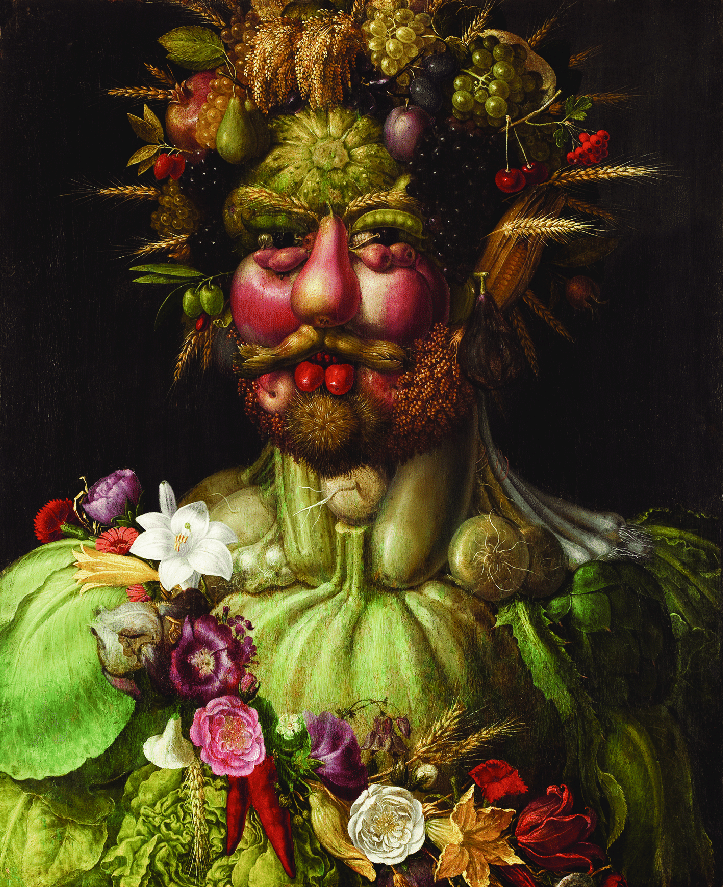
Vertumnus (Rudolf II) by Giuseppe Arcimboldo
The descriptions of Rudolf’s castle–and its menagerie–are fantastical. Lions, tigers, bears, apple trees, palm trees, olive trees, a maze, hedges in the shape of letters… an amazing place for anyone who visited in the 16th century. In a 2018 exhibition, the Bunkamura Museum in Japan hosted a number of artifacts from Rudolf’s fantastical collection that seem appropriate for today’s reading. First, the beautiful Orpheus Playing to the Animals (1625), allegedly inspired by the menagerie at Prague Castle. Second, this extraordinary portrait of Rudolf II as Vertumnus by court painter Giuseppe Arcimboldo. I had no idea this fellow (note the peapod eyelids and pear nose) was based on Rudolf II, nor that the Hapsburgs employed Arcimboldo for over 25 years. Vertumnus is the Roman god of seasonal change and metamorphoses — apt, I think, for a student of alchemy and the occult.
We’ll pick up again with Peter Knox in modern day Prague in our next post. In the meantime, don’t forget that our coverage of Time’s Convert begins this Sunday, April 12, 2020. You can follow us on Twitter as @chamomilenclove or join our Facebook group, the Chamomile & Clove Clovers, if you want to stay in touch.
We hope you and those you love are safe, sound, and healthy. We’re so grateful for our All Souls family and glad that you’re here. Take care of each other.
We promise — the plot and time travel discussion is coming — we’re just chickens. Procrastinating chickens. This week, we’re talking about all the themes covered by the All Souls Trilogy — identity, family, love and trauma, redemption, the meaning of the epigraph, and on and on. While wrapping our brains around these huge topics, we’re also talking about redeeming antagonists, the price of responsibility, divinity, cosmic duologies, and even a little tiny bit of time travel. It’s a big, meaty episode, so dig in and let us know what you think by shooting us a message on Twitter, sending us an e-mail, or by joining our discussion group, the Chamomile & Clove Clovers on Facebook.
If you haven’t already, please leave us a rating or review on the podcast application of your choice! You can also support us via Patreon or by purchasing some C&C swag on Redbubble.
Keep your eyes peeled for our Time’s Convert reading schedule on Twitter and Facebook. Also, MARK YOUR CALENDARS for All Souls Con this October in Philadelphia, Pennsylvania. Next time, we PLOT.
Starting this afternoon, we’ll begin recording our final two wrap episodes for the All Souls Trilogy — all three books, all at once. It’s going to be a blast.
In preparing for this episode, we’ve gone back into the vault and listened to our wrap episodes from A Discovery of Witches, Shadow of Night, and the Book of Life in order to tease out trilogy-wide themes, plots, character arcs, and motifs. While listening to the back catalogue, I realized it might be helpful for y’all to have all of our wrap episodes listed in one place. Accordingly, here’s a quick guide to our wrap episodes:
We are so excited to start talking about the trilogy as a whole and we hope you’ll join us. In the meantime, keep an eye out for more prizes and fun from the All Souls Discussion Group during the A Discovery of Witches TV 2020 Winter Watch! As always, you can find us on Facebook in the Chamomile & Clove Clovers group and on Twitter as @chamomilenclove. If you’re so inclined, you can check out our merchandise on Redbubble or become a member of our Patreon.
As always, please feel free to show us a bit of love on the podcasting app or review site of your choice. It helps other people find us and makes our day. We’re so lucky to have you!
This is our last discussion of The Book of Life by Deborah Harkness. It is not, however, our last foray into the world of All Souls. In addition to our planned All Souls Trilogy wrap episodes, we will be continuing to discuss A Discovery of Witches the TV series, and will be venturing into a discussion of Time’s Convert by Deborah Harkness. The point is, you’re not rid of us yet.
In this episode, we discuss themes, motifs, book favorites, and listener feedback for The Book of Life. Catch us next time for the first of our trilogy wrap episodes. We can’t wait!
You can reach us via e-mail at chamomileandclovecast@gmail.com, on Twitter @chamomilenclove, or on Facebook. You’re also welcome to rate us on Podchaser, support us on Patreon, or check out our pod merchandise on Redbubble.
You can also find us taking part in the ADOW TV Rewatch Party Giveaway. We’ve put up some exclusive C&C swag, so check out Deb’s website for the giveaway details, and enter to win here.





 Chamomile & Clove