In this episode, Jen and Cait discuss epsiode 1×04 of A Discovery of Witches the TV show. Join us as we talk about dialogue, relationships, grief, and jumpsuits.
If you’d like to join the conversation, follow us on Twitter @chamomilenclove or using the hashtag #ccalchemy, or email us at chamomileandclovecast@gmail.com. You can also find us on Facebook as Chamomile & Clove – An All Souls Podcast or join our Facebook group, The Chamomile & Clove Clovers. We can’t wait to hear from you!
After the death of Francis Walsingham, Cecil became the head of Elizabeth’s intricate spy network aimed at discovering (and squashing) Catholic plots against the queen.
The little snippet of Latin Lord Burghley quotes to Diana (Vanitatis vanitatum, omnis vanitas) comes from the Vulgate translation of Ecclesiastes 1:2, a verse which translates as “Vanity, vanity, everything vanity.” It’s a curious bit of verse for a Protestant, as it comes from the official version of the Latin Bible dating from the 4th century.
If you’re interested in Lord Burghley as a spymaster, there’s a current BBC series airing on PBS that looks pretty interesting.
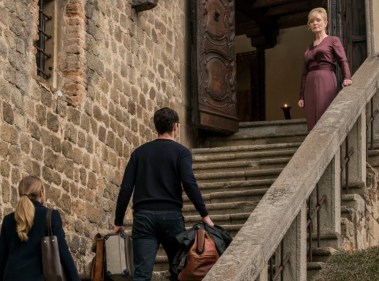
“Because if we are not in the audience chamber at Richmond Palace by two in the afternoon tomorrow, Elizabeth will arrest us both.”
Going to court in Tudor England was no small thing. First of all, the Tudor palaces were explicitly designed to restrict access to the monarchy and channel people of different rank into appropriate spaces. Because only the most important (and affluent) people made it into the presence of the king or queen, it paid to appear in court dressed in the finest clothing money could buy. In Tudor times, proximity to the king or queen was the quickest way to attain favor–and thereby improve your title and fortune. However, if Elizabeth I felt that you slighted, betrayed, or otherwise disobeyed her, the consequences could be brutal. Court was complicated, political, and highly performative.
In Shadow of Night, Elizabeth I’s court is located at Richmond Palace, the lost palace of the Tudor monarchy. Henry VII died in the palace and it became Elizabeth I’s favorite — she died there in 1603 and her body made the journey to Westminister Abbey from its gates. In the mid-seventeenth century, after the execution of Charles I, Oliver Cromwell and his administration systematically stripped the palace until only a few bits and pieces remained. You can still visit the site of Richmond Palace in southwest London today.
“And silver and black are the queen’s colors. That’s why Walter is always wearing them,” Mary explained, smoothing the puffed sleeves.
Elizabeth I had a vast and impressive wardrobe. As she grew older, she apparently leaned into the image of herself as the Virgin Queen and preferred to dress in black, white, and silver — colors she believed represented purity and virginity. Throughout Elizabeth’s reign, England remained under strict sumptuary laws — Elizabeth I believed that her courtiers should dress according to (but not exceeding) their rank. This is why Elizabeth has a bit of a fit when she notices Diana’s borrowed ostrich feather fan — a luxury restricted to gentlemen and above by the sumptuary laws. Fans in particular were a symbol of wealth, and fixed fans were a bit of A THING for Elizabeth I (you can see all of her fixed fans in her portraits here). Ostrich feathers came into fashion in England in 1552 and remained popular for the rest of the sixteenth century.
Three days later on the feast of St. Brigid, we set sail on our long journey to see the Holy Roman Emperor, find a treacherous English daemon, and, at long last, catch a glimpse of Ashmole 782.
We hope you’re enjoying the Real-Time Reading of Shadow of Night. If you like what we do, consider supporting us on Patreon or joining our Facebook group, the Chamomile & Clove Clovers. As always, you can find us on Twitter @chamomilenclove or e-mail us at chamomileandclovecast@gmail.com. We talked about this chapter and the end of Section III in Episode 31 — Full Elizabethan.
Until we see Verin in Berlin, take care of yourselves.
In this episode, it’s time to talk about middles of endings and endings of middles and middles muddles endings schmendings. You get the picture. When we return to the books in two weeks, we’ll give you our first wrap of this remarkable, complicated book.
Thanks so much for all of your great feedback on our TV coverage — we’re having the best time recording these episodes, discussing the show on Facebook, and hosting live tweets. Y’all are the best listeners in the world.
If you like what we do, consider supporting us on Patreon! In the meantime, you can always find us on Twitter @chamomilenclove or e-mail us at chamomileandclovecast@gmail.com. Until next time!
In this episode, Jen and Cait discuss 1×02 of A Discovery of Witches the television show. We’ve got antagonists, coats, best friends, and a budding romance on our hands!
If you’d like to join the conversation, follow us on Twitter @chamomilenclove or using the hashtag #ccalchemy, or email us at chamomileandclovecast@gmail.com. You can also find us on Facebook as Chamomile & Clove – An All Souls Podcast or join our Facebook group, The Chamomile & Clove Clovers. We can’t wait to hear from you!
Okay. This is the part where I admit that the calendar for the #RealTimeReading2018 (er, 2019?) of Shadow of Night confused me a bit — this chapter should have posted on 7 January, but I thought it was 12 January. That’s Chapter 20, and I am technically behind. Mea culpa.
Anyways. It’s time to meet Annie and Susanna and ask some big questions about Diana’s magic. Are you ready?
“I wish his good humor was more reliable. Matthew is mercurial these days. He’s possessive one moment and ignores me as if I were a piece of furniture the next.”
The etymology of the word “mercurial” indicates that it came into usage in the 14th century and derives form the Latin Mercurialis, “pertaining to the god Mercury, or having the form or qualities attributed to Mercury.” It means, “lively, volatile, or prone to quick changes of mood.” Interestingly, Diana’s modern use of the word to describe Matthew as “highly changeable” is slightly anachronistic — the English language apparently didn’t regularly apply the word to people until the 17th century.
Liquid mercury
Mercury (Hermes) was the messenger of the gods and the god of trade, merchants, commerce, roads, and thieves. Based on our enlightened and fascinating conversation about 16th century venereal diseases, you might recall that we used to treat all kinds of naughty-part nasty things with mercury (Hg). Mercury is highly mobile and very shiny and it takes its name from the planet Mercury, the fastest moving planet in the solar system. It’s highly toxic, but also really useful for its ability to conduct electricity. Would you like to know where we get mercury? Cinnabar. Hm. More on that later.
Mary and I had been deep in conversation about the images in a collection of alchemical texts known as the Pretiosa Margarita Novella — the New Pearl of Great Price.
Last summer, when we attended All Souls Con at the Science History Institute in Philadelphia, I wish I’d known that they keep a copy of Pretiosa Margarita Novella in their rare book room. There are only six known complete manuscripts of this alchemical treatise surviving in the present day and, lucky for us, two of them are digitized: the Science History Institute copy and the copy belonging to the Getty Alchemy Collection.
The Pretiosa Margarita Novella presents arguments for and against alchemy and cites to a number of classical sources. If you wanted your own copy, you could purchase it from AbeBooks.com for $5,926.03 (used).
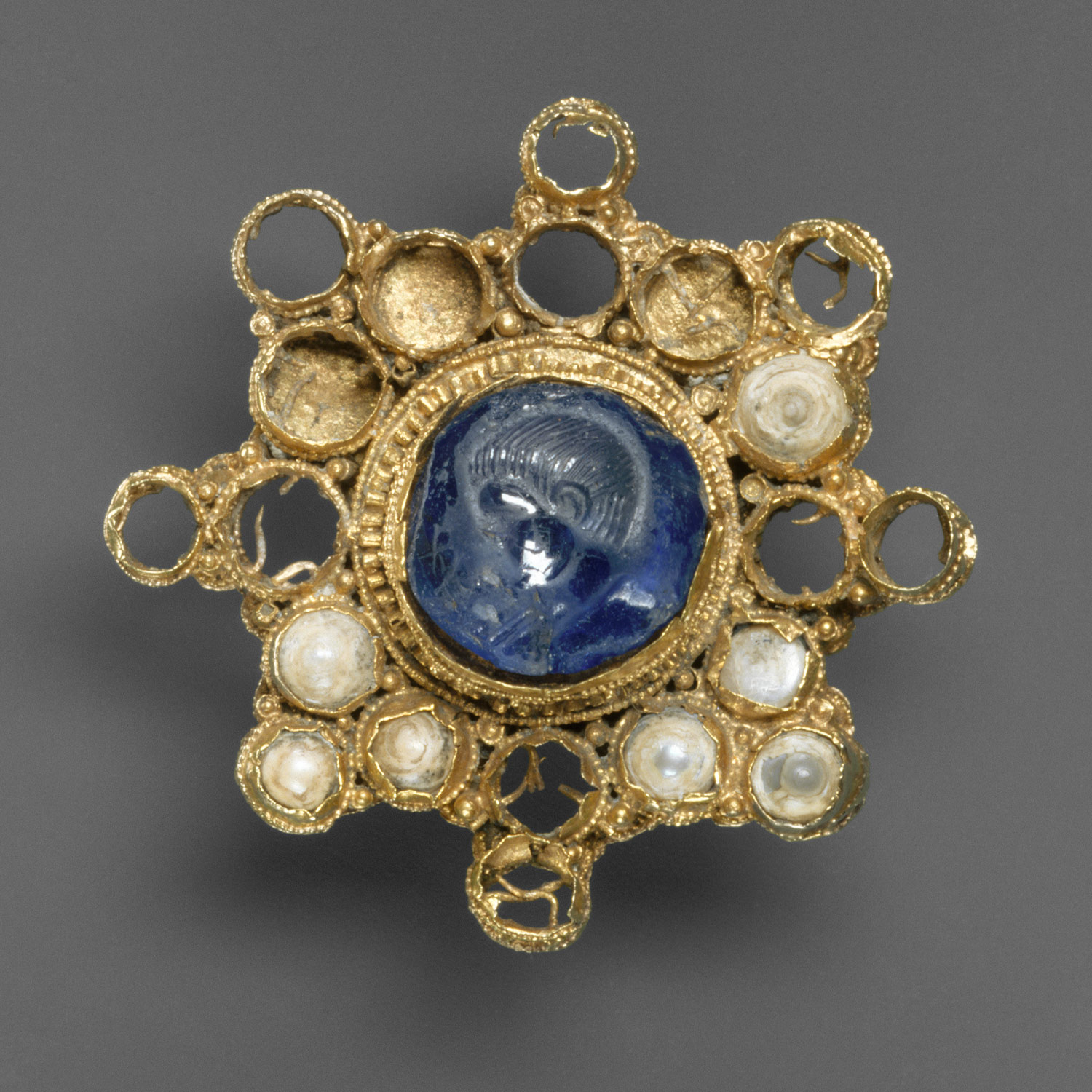
“An ancient specimen,” Henry said proudly. “It was among my curiosities, and I wanted you to have it. The intaglio is of the goddess Diana, you see.”
The All Souls Trilogy is rich with descriptions of the decorative arts–from furniture to portraits to jewelry–and Henry’s miniatures are no exception. We’ll skip the Hilliard bits, which we’ve already discussed, and move into a quick talk about intaglio jewelry. Intaglio refers to a decorative technique that is the opposite of cameo work — rather than creating a raised image on a decorative surface, the artist creates a recessed design, like a mold. Intaglio designs often appear on precious gems — they were a popular luxury art form in ancient times and experienced a renaissance during, well, the Renaissance.
Intaglio brooch from the Met Museum
The iconography of intaglio carvings often depicts gods, goddesses, and mythological scenes, so Henry’s Diana intaglio makes sense. There is a lovely example of a Diana intaglio in carnelian at The Jewellery Editor.
“I didn’t get the egg into the bowl, Mistress Norman,” I apologized. “The spells didn’t work.”
The still-wet chick set up a protest, one indignant peep after another.”
This is neither magical, nor directly on point, but I thought it was interesting — the “chicken and egg” causality dilemma first arose in Plutarch’s 1st century CE essay, “The Symposiacs.” The dilemma poses the question of origins and infinite sequences and has been solved, at least scientifically, by evolutionary biology. The answer is that the egg came first, laid by a not-quite-chicken. A dinosaur laid an egg that hatched a very ugly, toothy chicken. Then that toothy chicken laid another egg, which eventually laid its own eggs, and on and on. Forbes makes the following highly-philosophical point:
At what point did it become a chicken? It still isn’t a chicken, remember? There is no such thing as a chicken.
The eggs you buy at the store come from a small dinosaur that is still in the process of becoming what it will eventually become. It is the first of its kind. It is the last of its kind. Its children will not be chickens, any more than it is.
You heard it here, folks. There’s no such thing as a chicken. Only small dinosaurs capable of producing the base ingredient in custards, souffles, and omelettes.
If you like what we do, you can support us on Patreon to off-set our podcast hosting costs. You can also join our Facebook group, the Chamomile & Clove Clovers, or e-mail us at chamomileandclovecast@gmail.com. If you’re anxious for the premiere of A Discovery of Witches TV, please consider yourselves invited to our live tweet on 1/17 at 9pm. Use the hashtag #ccalchemy and make merry.








 Chamomile & Clove