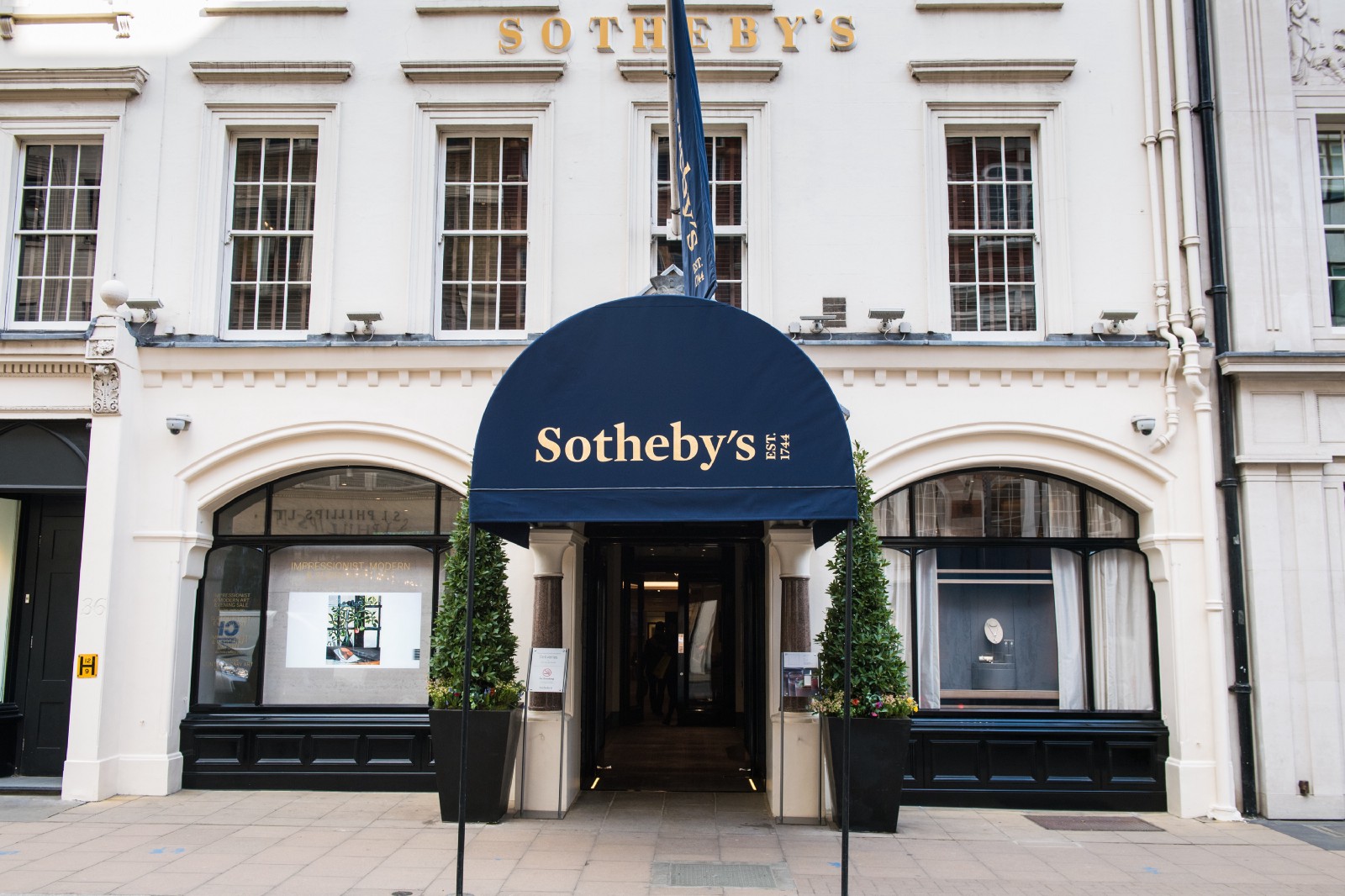
Phoebe found the quiet at Sotheby’s Bond Street offices unsettling this Tuesday night. Though she’d been working at the London auction house for two weeks, she was still not accustomed to the building.
The London office of the auction house moved to Bond Street in 1917 — and there it remains. The auction house began by selling off the great libraries of the deceased — including the library of the Earl of Pembroke. The move to Bond Street, the hub of the London art world, encouraged the owners of Sotheby’s to expand their coinnoiseurship and expertise into the realm of fine art. Sotheby’s has a history of selling Hilliard miniatures — this lovely portrait of a noblewoman sold in 2010 for 121,250 GBP.
“Where is Sylvia?” The blue eyes narrowed.
“At the ballet. Coppelia, I believe.”
The ballet Coppelia tells the story of Franz, Swanhilda, and the mysterious “daughter” of Dr. Coppelius, who is trying to animate a doll in a non-creepy way. Right. It’s presented as a comedy, but it definitely has some sinister undertones. Because Jen and I are both hopeless balletomanes, I can’t help but give you the Bolshoi’s delightful Dance of the Hours and the Act III female variation danced by Natalia Osipova.
As soon as the click sounded, Whitmore pushed his way through. He was dressed for a club in Soho, with his black jeans, vintage gray U2 t-shirt, and a ridiculous pair of high-top Converse trainers (also gray).
Today, for a change in programming, I present you with a build-your-own Marcus outfit kit.
A vintage U2 band tee in gray ($25) on Poshmark (likely from the ZOO tour)
Cait’s actual, factual no-fail black jeans ($49.97) at GAP
Charcoal Chuck Taylor All Star High-Tops ($43.64) on Amazon
Leather cord necklace ($7.49) on Amazon (teeth of yellow fever victims NOT included). You could, however, add one of these guys.
“That’s the best offer I’ve had in some time.” Whitmore’s mouth twitched. “If we’re going to proceed according to Hoyle, though, I think you should call me Marcus.”
Edmond Hoyle, 1672-1769, wrote the definitive eighteenth century rules for how to play cards. The phrase “according to Hoyle” denotes doing something according to accepted standards or rules. He wrote extensively on the laws of whist, a game you might recognize from the pages of Austen. In fact, Hoyle’s book on whist became so definitive that his name is synonymous with doing things by-the-book — his imitators put his name on rule books for games (like poker) that weren’t even invented during his lifetime.
As you well know, Phoebe and Marcus have plenty more to tell us in Time’s Convert. We won’t say more…. yet.
If you like what we do, you can support us on Patreon to off-set our podcast hosting costs. You can also join our Facebook group, the Chamomile & Clove Clovers, or e-mail us at chamomileandclovecast@gmail.com. If you’re anxious for the premiere of A Discovery of Witches TV, please consider yourselves invited to our live tweet on 1/17 at 9pm. Use the hashtag #ccalchemy and make merry.
Okay. This is the part where I admit that the calendar for the #RealTimeReading2018 (er, 2019?) of Shadow of Night confused me a bit — this chapter should have posted on 7 January, but I thought it was 12 January. That’s Chapter 20, and I am technically behind. Mea culpa.
Anyways. It’s time to meet Annie and Susanna and ask some big questions about Diana’s magic. Are you ready?
“I wish his good humor was more reliable. Matthew is mercurial these days. He’s possessive one moment and ignores me as if I were a piece of furniture the next.”
The etymology of the word “mercurial” indicates that it came into usage in the 14th century and derives form the Latin Mercurialis, “pertaining to the god Mercury, or having the form or qualities attributed to Mercury.” It means, “lively, volatile, or prone to quick changes of mood.” Interestingly, Diana’s modern use of the word to describe Matthew as “highly changeable” is slightly anachronistic — the English language apparently didn’t regularly apply the word to people until the 17th century.
Liquid mercury
Mercury (Hermes) was the messenger of the gods and the god of trade, merchants, commerce, roads, and thieves. Based on our enlightened and fascinating conversation about 16th century venereal diseases, you might recall that we used to treat all kinds of naughty-part nasty things with mercury (Hg). Mercury is highly mobile and very shiny and it takes its name from the planet Mercury, the fastest moving planet in the solar system. It’s highly toxic, but also really useful for its ability to conduct electricity. Would you like to know where we get mercury? Cinnabar. Hm. More on that later.
Mary and I had been deep in conversation about the images in a collection of alchemical texts known as the Pretiosa Margarita Novella — the New Pearl of Great Price.
Last summer, when we attended All Souls Con at the Science History Institute in Philadelphia, I wish I’d known that they keep a copy of Pretiosa Margarita Novella in their rare book room. There are only six known complete manuscripts of this alchemical treatise surviving in the present day and, lucky for us, two of them are digitized: the Science History Institute copy and the copy belonging to the Getty Alchemy Collection.
The Pretiosa Margarita Novella presents arguments for and against alchemy and cites to a number of classical sources. If you wanted your own copy, you could purchase it from AbeBooks.com for $5,926.03 (used).
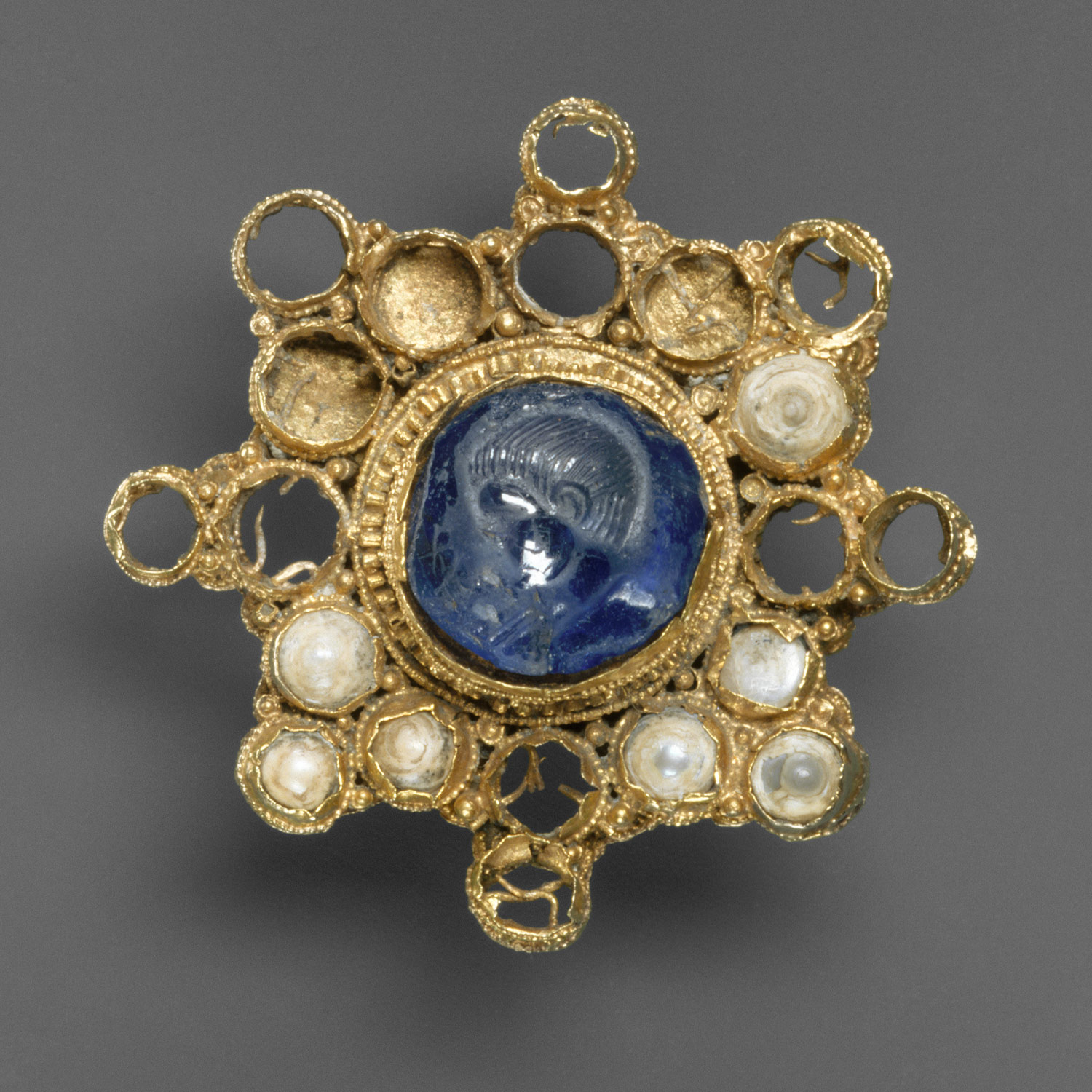
“An ancient specimen,” Henry said proudly. “It was among my curiosities, and I wanted you to have it. The intaglio is of the goddess Diana, you see.”
The All Souls Trilogy is rich with descriptions of the decorative arts–from furniture to portraits to jewelry–and Henry’s miniatures are no exception. We’ll skip the Hilliard bits, which we’ve already discussed, and move into a quick talk about intaglio jewelry. Intaglio refers to a decorative technique that is the opposite of cameo work — rather than creating a raised image on a decorative surface, the artist creates a recessed design, like a mold. Intaglio designs often appear on precious gems — they were a popular luxury art form in ancient times and experienced a renaissance during, well, the Renaissance.
Intaglio brooch from the Met Museum
The iconography of intaglio carvings often depicts gods, goddesses, and mythological scenes, so Henry’s Diana intaglio makes sense. There is a lovely example of a Diana intaglio in carnelian at The Jewellery Editor.
“I didn’t get the egg into the bowl, Mistress Norman,” I apologized. “The spells didn’t work.”
The still-wet chick set up a protest, one indignant peep after another.”
This is neither magical, nor directly on point, but I thought it was interesting — the “chicken and egg” causality dilemma first arose in Plutarch’s 1st century CE essay, “The Symposiacs.” The dilemma poses the question of origins and infinite sequences and has been solved, at least scientifically, by evolutionary biology. The answer is that the egg came first, laid by a not-quite-chicken. A dinosaur laid an egg that hatched a very ugly, toothy chicken. Then that toothy chicken laid another egg, which eventually laid its own eggs, and on and on. Forbes makes the following highly-philosophical point:
At what point did it become a chicken? It still isn’t a chicken, remember? There is no such thing as a chicken.
The eggs you buy at the store come from a small dinosaur that is still in the process of becoming what it will eventually become. It is the first of its kind. It is the last of its kind. Its children will not be chickens, any more than it is.
You heard it here, folks. There’s no such thing as a chicken. Only small dinosaurs capable of producing the base ingredient in custards, souffles, and omelettes.
If you like what we do, you can support us on Patreon to off-set our podcast hosting costs. You can also join our Facebook group, the Chamomile & Clove Clovers, or e-mail us at chamomileandclovecast@gmail.com. If you’re anxious for the premiere of A Discovery of Witches TV, please consider yourselves invited to our live tweet on 1/17 at 9pm. Use the hashtag #ccalchemy and make merry.
Today in the Real Time Reading of Shadow of Night, it’s time to descend into the crypt and meet Father Hubbard. I hope your New Year’s Eve plans are better than Matthew and Diana’s…
“She’s taken over one of the castle’s towers and painted the walls with images of the philosopher’s stone. It’s like working inside a Ripley scroll! I’ve seen the Beinecke’s copy at Yale, but it’s only twenty feet long. Mary’s murals are twice as big. It made it hard to focus on the work.”
I had planned to include photos from one of the scrolls, but Google beat me at my own game. I highly recommend the Google tour of the British Library’s Ripley Scroll, which is interactive and beautifully-rendered. One can only imagine the color and detail Diana noticed on the walls of Mary’s laboratory.
You can also explore other copies of the scrolls via the Bodelian’s website. Because they’re the best.
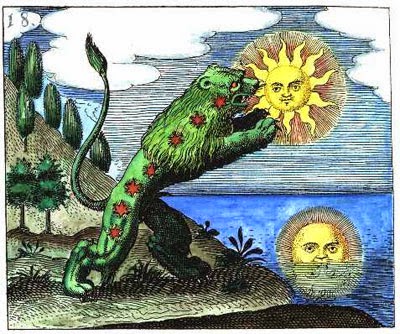
“We hunted the green lion.”
As Diana tells us in the text, the hunt for the “green lion” refers to the point in the process of creating the philosopher’s stone where alchemists combined two acid solutions (usually green vitriol, distilled from copper sulfate and something else) capable of dissolving anything (save gold).
Symbolically, the dissolution of substances in green vitriol is said to represent the purification of the innermost self — the stripping away of torment to reveal the “golden self” within.
“Andrew Hubbard is a former priest, one with a poor education and enough grasp of theology to cause trouble. He became a vampire when the plague first came to London. It had killed nearly half the city by 1349. Hubbard survived the first wave of the epidemic, caring for the sick and burying the dead, but in time he succumbed.”
Hubbard’s cold glance touched my neck, taking in the scar there. For once I wished Francoise had outfitted me with the largest ruff she could find. He exhaled in an icy gust smelling of cinnabar and fir before his wide mouth tightened, the edges of his lips turning from pale peach to white.
Cinnabar is the solid form of mercury sulfide, an ore often used to refine mercury for commercial use. It is also the source of brilliant red pigments, such as vermilion. The Met has a great resource on the use of cinnabar in art and pigment making. I couldn’t find anything to tell me what it smells like, precisely, but the fact that it’s normally sourced from volcanic soil makes me think it smells rocky and mildly sulfuric. Unsurprisingly–given the world of the AST, at least–cinnabar was prized by alchemists because of its unusual properties and because it supplied mercury.
Jen and I hope that you have a wonderful, prosperous new year — one that doesn’t start with someone threatening you and your family in a crypt in the middle of the night. In fact, we hope that your 2019 is full of blessings and good luck. We can’t wait to celebrate with you and continue exploring this amazing world together in the new year.
“He is not a goldsmith.” Field protested. “We do not want to cause Monsieur Vallin trouble.”
Jacqueline was unperturbed. “There are benefits to living in the Blackfriars, Richard. Working outside the regulations of the guilds is one of them.”
Tudor London was a warren of competing trade regulations and powerful monopolies. Beginning in the middle ages, guilds began to take on an important role in the commerce of the City of London. Guilds filed charters with the City of London and retained extraordinary control over their members–and others. For example, take the Worshipful Company of Stationers and Newspaper Makers, established 1403. The Guild of Stationers was empowered to seize and destroy books produced by anyone who did not belong to the guild within the City of London and also had the power to impound books that “offended” standards of decency. Members were entitled to lay claim to particular texts — once a member of the guild purchased or obtained the “right to copy” a particular book, no other member of the guild within the City could do so.
“That’s where Henry’s mother lives,” George said, gesturing at a particularly imposing set of buildings to our left. “He hates the place and lived around the corner from Matt until Mary convinced him that his lodgings were beneath an earl’s dignity.”
There isn’t much to be had on the internet about Katherine Percy (nee Neville), Countess Northumberland. Henry Percy’s London home, Northumberland House, occupied a choice piece of real estate on the Thames along the Strand. The Strand connects the City of London with the royal properties at Westminster and was once the site of mansions owned by England’s most prominent families. Northumberland House was a large Jacobean townhouse that overlooked Trafalgar Square and the River Thames. The house was demolished in 1874. You can see a print of Northumberland House courtesy of the Museum of London.
The blank sheet of paper folded discreetly around it masked the salacious contents. It enumerated cures for venereal diseases, most of them involving toxic concentrations of mercury. No wonder Chandler had objected to selling a copy to a married woman.
As one might expect, the sixteenth century isn’t well-known for sexual hygiene. We apparently don’t have a good idea of where syphilis came from, but we definitely know that it spread like wildfire through Europe in the fifteenth century. According to Sarah Dunant, writing for The Guardian, “The theories surrounding the disease were are as dramatic as the symptoms: an astrological conjunction of the planets, the boils of Job, a punishment of a wrathful God disgusted by fornication or, as some suggested even then, an entirely new plague brought from the new world by the soldiers of Columbus and fermented in the loins of Neapolitan prostitutes.” Apparently, at one time, as many as one-fifth of the people in Britain suffered from syphilis as a result of a terrible cycle — the disease spread from brothels to households to children and nursemaids and often resulted in painful, agonizing death.
Diana’s possession of a treatise on the treatment of venereal disease is remarkable because very few authors started writing about STDs in England until the latter half of the 16th century. She likely holds one of the first published books on venereal disease in the English language — a true collector’s item.
We’ll catch up to Matthew and Diana in Mary’s solar tomorrow before we ring in the new year with a visit to Andrew Hubbard. If you’re enjoying the Real-Time Reading, come tell us about it in our Facebook group or shoot us an e-mail at chamomileandclovecast@gmail.com.
First off, darlings, you have my sincere apologies — the holidays caught up to me and this entry is a day later than I would like. I hope you can forgive me. I also hope your holiday was restful and that you have time for yourself between now and the new year.
“Women do have babies in the sixteenth century,” I said mildly. “Besides, I don’t feel any different. I can’t be more than a few weeks pregnant.”
As you might know from our episode on this chapter, this argument between Matthew and Diana is really difficult to stomach. They’re both a little bit right and a little bit wrong, but the effect is painful for anyone who loves them and wants their relationship to succeed.
Unlike modern women, women in Tudor England lacked reliable pregnancy tests and prenatal care. Women generally realized their pregnancy after several months of missed menstrual cycles — it sounds straightforward enough, but it’s a dodgy thing when your menses are already affected by other factors, such as your age or your access to good nutrition. You could, of course, rely on other methods, such as asking the putative father whether he felt “sucking or drawing” during sex. Oy.
“Religious books are popular gifts, and easy to sell. Books about medicine have a smaller audience and are too costly to bind without a commission.” Matthew explained as I fingered the limp covering. He handed me yet another volume. “Luckily, I had already ordered a bound copy of this one. It’s hot off the presses and destined to be a bestseller.”
Matthew presents Diana with a bound copy of Sir Philip Sidney’s Arcadia, a prose romance that the poet dedicated to his sister, Mary Herbert, Countess of Pembroke. Sir Philip Sidney died in 1586 of a leg wound that turned gangrenous after the Battle of Zutphen. Arcadia was incomplete at the time of Sidney’s death — the story apparently left off in the middle of a sword fight — but Fulke Greville published an early version of the story in 1590. You can meander through an early copy of Arcadia via the British Library’s website.
My initial reluctance to meet Mary Sidney faded as our rendezvous approached. The more I remembered–and discovered–about the Countess of Pembroke, the more excited I became.
Mary Herbert, Countess of Pembroke (1561-1621), made a name for herself as a patron of the arts and a poet in her own right.
“Baynard’s Castle was built to be approached from the river, Diana,” Henry said in an apologetic tone as we traveled down another winding lane. “This is the back entrance, and not how visitors are supposed to arrive — but it is a great deal warmer on a day like this.”
“Well, well, well,” Matthew interrupted with a chuckle. “My wife has arrived.” I looked at him in confusion. “Mary’s most treasured project is not alchemical but a new rendition of the Psalms for English Protestants. Her brother Philip began it and died before it was complete.”
Here is Psalm 51, by Mary Sidney, Countess of Pembroke:
O Lord, whose grace no limits comprehend; Sweet Lord, whose mercies stand from measure free; To me that grace, to me that mercy send, And wipe, O Lord, my sins from sinful me. Oh, cleanse, oh, wash, my foul iniquity; Cleanse still my spots, still wash away my stainings, Till stains and spots in me leave no remainings.
For I, alas, acknowledging do know My filthy fault, my faulty filthiness To my soul’s eye incessantly doth show, Which done to thee, to thee I do confess, Just judge, true witness, that for righteousness Thy doom may pass against my guilt awarded, Thy evidence for truth may be regarded.
My mother, lo, when I began to be, Conceiving me, with me did sin conceive: And as with living heat she cherished me, Corruption did like cherishing receive. But, lo, thy love to purest good doth cleave, And inward truth: which, hardly else discerned, My truant soul in thy hid school hath learned.
Then as thyself to lepers hast assigned, With hyssop, Lord, thy hyssop, purge me so: And that shall cleanse the lepry of my mind. Make over me thy mercy’s streams to flow, So shall my whiteness scorn the whitest snow. To ear and heart send sounds and thoughts of gladness, That bruised bones may dance away their sadness.
Thy ill-pleased eye from my misdeeds avert: Cancel the registers my sins contain: Create in me a pure, clean, spotless heart; Inspire a sprite where love of right may reign Ah, cast me not from thee; take not again Thy breathing grace; again thy comfort send me, And let the guard of thy free sprite attend me.
So I to them a guiding hand will be, Whose faulty feet have wandered from thy way, And turned from sin will make return to thee, Whom turned from thee sin erst had led astray. O God, God of my health, oh, do away My bloody crime: so shall my tongue be raised To praise thy truth, enough cannot be praised.
Unlock my lips, shut up with sinful shame: Then shall my mouth, O Lord, thy honor sing. For bleeding fuel for thy altar’s flame, To gain thy grace what boots it me to bring? Burt-off’rings are to thee no pleasant thing. The sacrifice that God will hold respected, Is the heart-broken soul, the sprite dejected.
Lastly, O Lord, how so I stand or fall, Leave not thy loved Zion to embrace; But with thy favor build up Salem’s wall, And still in peace, maintain that peaceful place. Then shalt thou turn a well-accepting face To sacred fires with offered gifts perfumed: Till ev’n whole calves on altars be consumed.
We’ll continue our real-time reading tomorrow as Diana runs errands in Tudor London. In the meantime, we hope you’re taking advantage of the sneak peek of Episodes 1 and 2 of A Discovery of Witches TV on Sundance Now and Shudder. We’d love if you popped by our Facebook group to share your excitement or sent us an e-mail at chamomileandclovecast@gmail.com. We hope to see you there!






 Sir Philip Sidney died in 1586 of a leg wound that turned


 Chamomile & Clove