“Time is tricky. Even if everything went according to plan and Diana took Matthew back to the first day of November in 1590, it may still be too soon to look for a message from your husband. And you wouldn’t have found a message before, because Philippe hadn’t met my niece yet.” Sarah paused. “I think Tabitha’s eating that book.”
I agree with Sarah — time is tricky.
In this chapter, we flash forward to the library with Ysabeau. As I mentioned yesterday, the calendar gets funky as Diana and Matthew travel back to London after their time at Sept-Tours. Lucky for us, we get to spend Christmas back at the chateau. The chapter is short and doesn’t have much for us to puzzle out, so I am going to leave you with a wee tidbit from another chapter and get back to celebrating the holiday.
Philippe went to the shelves and picked out a volume in a worn leather binding. “This is one of our favorite stories, The Song of Armouris. Ysabeau and I have simple tastes and enjoy stories of adventure. We are always hiding messages in this.” He stuffed a scroll of paper down the spine between the binding and the gatherings of vellum. A folded rectangle fell out of the bottom as he worked it into the tight space.
Okay, I cheated. This quote is from Chapter 13, but I love the note passing so much that I absolutely can’t help myself.
The Song of Armouris is a Byzantine story loosely based on the Byzantine-Arab conflict. The story follows a young man – Armouris – as he completes feats of strength and secures peace between his people and the Saracens. The poem probably dates from the 11th century — only two full copies of the manuscript survive. One can be found in St. Petersburg and one in Istanbul. I love to think of Philippe and Ysabeau reading this story to one another by the fire.
“Anomalies,” Ysabeau murmured. “Philippe was always looking for anomalies in the world. It is why I still read all the newspapers. It became our habit to look through them each morning.” Her eyes closed against the memory. “He loved the sports section, of course, and read the education columns as well. Philippe was worried about what children would learn in the future. He established fellowships for the study of Greek and philosophy, and he endowed colleges for women. I always thought it strange.”
“He was looking for Diana,” Emily said with the certainty of someone blessed with second sight.
Lucky for you, we all got to be time travelers today. Have you checked out Episodes 1 and 2 of A Discovery of Witches TV on Shudder and Sundance Now. You can stream both channels on Google Play, Apple TV, Roku, and Amazon FireTV. Tell us what you think about the episodes in our Facebook group or send us an e-mail at chamomileandclovecast@gmail.com.
We wish you and yours a merry merry holiday and can’t wait to catch up with you (and Matthew and Diana) tomorrow.
Diana and Matthew spend the first ten days of their THIRD AND MOST EFFECTIVE MARRIAGE in a sort of honeymoon. The “honeymoon” apparently originated in Britain as a way of visiting relatives and friends who couldn’t make it to your actual ceremony. The word “honeymoon” may refer to an old tradition (5th century or earlier) of drinking honeyed wine a month after your wedding to aid in conception. In the absence of contraceptives, that gesture seems a bit… belated.
In some cultures, the honeymoon period refers to the time between when grooms kidnapped and captured their brides and (1) the point at which the bride became pregnant and couldn’t be returned to her family, or (2) the point at which the family gave up hope of finding her. As this tradition appears to be vaguely Norse in origin, we should probably have a long talk with Gallowglass. For the record, this also makes a great deal of sense considering the real reason why bridesmaids all wear the same dress — to act as decoys for the real bride. Your only job as a bridesmaid is either to distract would-be kidnappers from the actual bride or lure evil spirits. Your call.
There are hundreds of Auvergnat euphemisms for making love, but I don’t believe that’s one of them. I’ll ask Chef if he’s familiar with it.”
While I couldn’t find any Auvergnat euphemisms in particular, I figured I would favor you with a few very saucy French ones. Allons-y.
Faire boum boum – Literally, to make the boom boom. As in, naughty time so loud you can hear it.
S’envoyer en l’air – “To be sent into the air” – casual, no-strings-attached whoopie.
Avoir du monde au balcon – Er, “to have people on the balcony.” It means that your lady-friend fills out her top.
Tremper son biscuit – “To dip the biscuit” – a person who likes to get naughty with everyone.
Hey, girl. You wanna play topsy-turvy? *wink wink*
It’s no coincidence that the Christian feast of Christmas falls on 25 December: as the Bible does not give a particular date for celebrating the birth of Christ, churches settled on combining the Christmas celebration with that of Saturnalia somewhere in the 4th century C.E. Pope Julius I apparently believed that combining celebrations would encourage more converts to Christianity.
The clock was unlike any I’d ever seen before. A carved and gilded cabinet surrounded a water barrel. A long copper pipe stretched up from the barrel and dropped water into the hull of a splendid model ship suspended by a rope wound around a cylinder.
In the Real-Time Reading Companion, Deb indicates that Philippe’s clock is the missing water clock of mathematician and cartographer Oronce Fine. The water clock, or clepsydra, dates back to 1500 BCE. Sadly, I couldn’t find an image of a water clock from the same era, but you can read about the evolution and function of water clocks here.
Friday marked the shortest day of the year and the celebration of Yule.
If you’re interested in celebrating some Yuletide traditions in your own home, consider taking a solstice walk to gather a Yule log for burning in your hearth. You could create a Yule altar filled with “solar-related botanicals” such as cinnamon, star anise, and cloves. You could incorporate gratitude for the return of the sun in your meditation or yoga practice. Give the gift of seeds to those you love to celebrate the coming spring. If you’re feeling super festive, you might make something special, like this wassail, to share with your friends. If you’d like alcoholic wassail (*raises hand*), you might try this version.
We covered this chapter of Shadow of Night in Episode 25 – Partyfamilias. Until next time, we hope that you and your loved ones celebrate a healthy and happy Saturnalia, a blessed solstice, and a merry Yule. Feel free to join our Facebook group, or shoot us an e-mail at chamomileandclovecast@gmail.com. You can also follow us on Twitter @chamomilenclove.
If you’re so inclined, Food52 has suggestions for a medieval dinner party prepared in a modern kitchen: chickpea stew, roast chicken, garlic confit, roasted potatoes, and an almond cake. You can also find a rather extensive list of medieval recipes here. I wish you particular luck with the dish called “Garbage.”
Artemis Agrotere, renowned huntress, Alcides Leontothymos beseeches you to hold this child Diana in your hand. Artemis Lykeie, lady of the wolves, protect her in every way. Artemis Patroia, goddess of my ancestors, bless her with children so that my lineage continues. Artemis Phosphoros, bring the light of your wisdom when she is in darkness. Artemis Upis, watch over your namesake during her journey in this world.”
In his incantation, Philippe refers to a number of “epithets” of Artemis. Epithets could be used for literary or ritualistic emphasis to identify the deity (or the aspect of the deity) to whom one prayed.
At the height of the classical period, one could find those worshiping Greek deities from Spain to Afghanistan. Without a standardized image of a deity and without established worship practices, the various cults of Greek gods and goddesses developed different forms of address that reflected both the desire to avoid addressing the divine directly (HEY DEMETER, ARE YOU LISTENING? v. “I beseech you, great lady of the hearth.”).
Philippe’s incantation lists several of Artemis’s epithets, but there are dozens of others, including:
Brauronia – protector and keeper of girls
Parthenos – “virgin”
Hegemone – ruler of nymphs
Limenia – protector of harbors
Limnatis – goddess of transition, goddess of the marsh
Lokhea, Genetyllis – protector of women in childbirth
Aeginaea – wielder of the javelin
Coryphaea – goddess who inhabits the summit of the mountain
Daphnaea – “of the laurel”
Heurippe – finder of horses
See here and here. There is a Roman temple near Clermont-Ferrand in France that may have served as the inspiration for Philippe’s temple in Shadow of Night.
A hero with dark hair and green eyes named Peleus left his home to seek his fortune.”
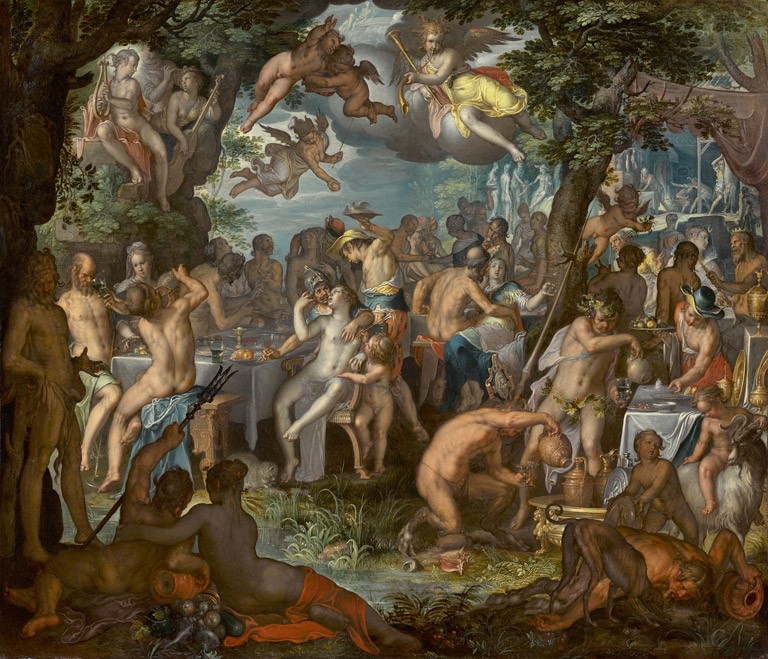
As we discussed in Episode 25 – Partyfamilias, Philippe uses the wedding banquet as an opportunity to tell the story of Peleus and Thetis, the sea nymph, parents of Achilles. The myth of Peleus and Thetis is a complicated one, but it’s useful to know that their wedding is the one that started the Trojan War. P&T failed to invite Eris, goddess of strife, to the wedding and so she sent the golden apple inscribed with the words, “To the fairest.” Chaos ensued. Many died.
The part we haven’t talked about yet is the potential connection between Philippe — Alcides Leontothymus, or maybe Heracles–and Peleus. See, Peleus was a friend of Heracles who served with the great hero in his expedition against the Amazons. Philippe sings the invocation to the heroes from Catullus at Matthew and Diana’s wedding banquet. Catullus wrote that the Fates sang a magic song–this magic song–at the wedding of Peleus and Thetis, much as Philippe does for Matthew and Diana.
The Wedding of Peleus and Thetis, 1612, oil on copper. Joachim Wtewael.
To be fair to Marie, La Robe (I thought of my ensemble only in French, and always in capitals) was spectacular,
Marriages take place at the church door to avoid bloody disputes later over whether or not the ceremony took place as reported. We can thank God there isn’t a blizzard.”
Matthew’s correct — medieval marriages often happened outside to ensure multiple witnesses. In an era where most marriages took place for financial or political reasons, everyone had a rather vested interest in legitimacy — both of the marriage and of any offspring who resulted from the match. This is odd, I think for a period of history in which it was relatively easy to get married by accident. This is the plot of several Hallmark movies and Lauren Willig’s Deception of the Emerald Ring (good fun, would recommend).
To my great surprise, Medieval Times (yes, THAT Medieval Times) has a reasonably-sized article on medieval marriage ceremonies. Around the internet, you can find a wealth of trivia regarding medieval weddings — did you know, for example, that the tradition of throwing the garter (which I detest) comes from the Middle Ages? People used to bundle the bride and groom forcibly into bed and then rip off bits of their clothes as tokens. The garter is a convenient way to do that without, you know, committing assault. Tiered wedding cakes also appear to come from the medieval period, when guests of the bride and groom would bring tiny cakes to stack on top of one another as a part of the marriage feast.
For your entertainment, here’s an unrelated article on weird wedding traditions from Mental Floss. Should you be interested in planning your own medieval or Renaissance wedding, Pinterest has you covered.
We’ll catch up to Matthew and Diana on 17 December at the end of their honeymoon. In the meantime, feel free to join us in our Facebook group, the Chamomile and Clove Clovers, or follow us on Twitter @chamomilenclove. You can also e-mail us at chamomileandclovecast@gmail.com.
Hello, dear ones. Because this chapter contains SO MUCH PLOT, there aren’t too many Easter eggs for us to play with during the Real-Time Reading. Accordingly, enjoy this short entry and then re-read this phenomenal chapter to catch up with Matthew and Diana before THE WEDDING. You know you want to.
Don’t consider painful what’s good for you,” Matthew muttered.
“I never should have taught you Greek — or English either. Your knowledge of them has caused me no end of trouble,” Philippe replied, unperturbed.
Throughout the early part of the hay barn episode, Matthew and Philippe trade quotes attributed to Euripedes — the great Greek tragedian, author of Medea, The Trojan Women, Heracles, etc. Along with Aeschylus and Sophocles, his plays constitute the foundation of a classical education. Euripedes was famous for both his pragmatic approach to divine characters and his tendency to paint mythic heroes and heroines as ordinary, flawed human beings.
Try as I might, I couldn’t find a solid attribution for two of the three quotes (“Don’t consider painful what’s good for you” and “those whom the gods wish to destroy, they first make mad”). They’re both attributed to Euripedes, but there’s nothing like them in the surviving texts of his plays and the internet let me down rather spectacularly when it came to trying to find them in their original form. If we have classicist Clovers with a penchant for Greek tragedy who can help me out, I’d be in their debt.
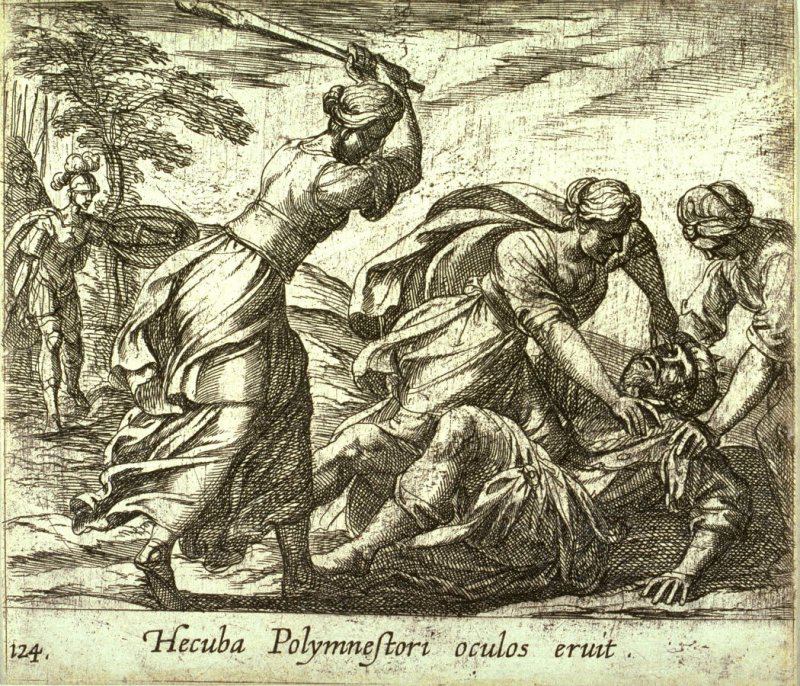
Hecuba blinding Polymestor.
The last quote — “Neither earth nor ocean produces a creature as savage and monstrous as woman” — comes from the play Hecuba, which tells the tale of the Trojan queen after the end of the war with the Greeks. In the play, Hecuba vows to avenge the murder of her children, Polyxena and Polydorus. She takes her revenge by murdering the children of King Polymestor, who was to protect Polydorus, and by stabbing Polymestor himself in the eyes.
Hecuba, like most of Euripedes other work, is exactly no fun. Described as a story of “unmitigated hopelessness,” the story ends as it began — with anguish, bloodshed, mourning, and cursing the gods who predestined such terrible fates for mortals.
Matthew is in a blood rage. We manjasang are closer to nature than other creatures — pure predators, no matter how many languages we speak or what clothes we wear. This is the wolf in him trying to free himself so that he can kill.
In the Real-Time Reading Companion, Deb writes that the song she has in mind for this moment is Damien Rice’s “Volcano.”
Philippe’s thumb returned to the place where he began, and he made a mirror image of the mark on the other side, finishing between my brows. My witch’s third eye tingled with the cool sensation of vampire blood.
Amazingly, I don’t think we covered the third eye in our RTR of A Discovery of Witches. In some spiritual traditions, the third eye refers to the ajna or brow chakra. Associated with religious visions and out-of-body experiences, the third eye is associated with heightened consciousness and intuition. Should you be interested in experimenting with yours, the White Witch Parlor offers Ten Ways to Activate Your Third Eye. Let me know how it goes, will you?
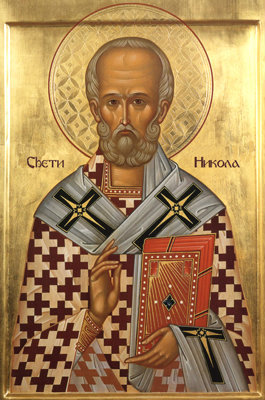
The next day was the Feast of St. Nicholas, and the sun shone on the snow.
December 6 is the feast day of St. Nicholas of Myra, a Turkish saint whose legend transformed over the centuries into the myth of Santa Claus. December 6 marks the beginning of Advent, the period of the Catholic liturgical year leading up to the celebration of Christmas on December 25.
Saint Nicholas Icon, Serbia
Saint Nicholas (or Nicholas of Bari) is the patron saint of sailors, merchants, archers, repentant thieves, children, pawnbrokers, and students in Europe. He is also the patron saint of Russia and Greece and figures prominently in Eastern Orthodox Christianity. After Nicholas died, Italian merchants stole his bones and moved his relics from Myra, Turkey, to Bari, Italy. He is celebrated and remembered as a bringer of gifts, particularly to children. In the Netherlands, St. Nicholas is called Sinterklaas — a benevolent saint who fills the shoes of good children with sweets on his feast day. The Dutch brought Sinterklaas to New Amsterdam in the 1700s, where he became Santa Claus. The association between Saint Nicholas and the Christmas holiday did not begin until well into the 19th century.
Saint Nicholas Day celebrations vary widely from country to country. In Holland, people still put out shoes to receive small gifts and candies. In France, people may enjoy a traditional meal of pork, mustard, and apples. In Eastern Europe, Saint Nicholas is often accompanied by the Krampus, a half-man, half-goat figure who punishes children who misbehave.
The air felt full, tingling with an almost electrical current. I half expected to hear a rumble of thunder, the atmosphere was so thick. Peter Knox had been mentally invasive, and Satu had inflicted great pain at La Pierre, but this witch was different and somehow more dangerous
In the Real-Time Reading Companion, Deb offers “The Wizard” by Bat for Lashes as the soundtrack to this scene.
We’ll pick up with Chapter 12 on 8 December and attend our favorite wedding.
If you have thoughts or feelings on the Real-Time Reading, please feel free to e-mail us at chamomileandclovecast@gmail.com, or follow us on Twitter @chamomilenclove. You can also find like-minded Clovers on our Facebook group, the Chamomile & Clove Clovers. See you at the wedding!
“Your father is treating me like a woman of the time. I’ll manage, Matthew.”
Ah, look. We’re back to gender politics in Shadow of Night. Surprise, surprise.
Now’s as good a time as any to talk about what I mean by “gender politics” when we talk about it on the podcast or when I talk about reading gender in the All Souls Trilogy. Gender has an enormous influence on our lives. We see, understand, express, and experience gender in a thousand different ways — how we talk, how we dress, how we move, how we see and understand ourselves in comparison to how other people express gender. Gender impacts the way that we navigate the world — how we expect to be treated, how we understand events that happen to us, how we approach risk, how we perceive the boundaries of good/bad/acceptable/appropriate behavior. From birth, we’re assigned a gender and many of us are raised in conformity with that gender assignment.
Fundamentally, when we talk about “what men do” and “what women do” or what’s acceptable for them, we’re talking about power. Talking about power — how we use it, what we do with it, how it shapes the world we live in — is talking about politics. The question of gender politics in literature asks how we portray characters as “masculine” and “feminine,” how much agency or power we give them, how gender determines their importance or power in the text, how characters are marginalized, exploited, emphasized, or celebrated based on gendered expressions of power, etc. This is complicated enough when you’re reading a contemporary text set in a contemporary time period. It’s even more complicated when you’re reading a contemporary text set in a historical time period where contemporary ideas about gender interact with “historical” ideas about gender, or at least historical ideas about gender as the author portrays them.
The quotation marks around the word “historical” aren’t mocking, and they aren’t judgmental. It’s a way of noting that, in writing, we choose every word. We have the power to construct a world how we see it. No work of human creation will ever actually capture history, so we have to be mindful of the fact that when you write, you choose to emphasize, de-emphasize, construct, or otherwise incorporate certain ideas as you do it. Accordingly, the “historical” ideas about gender in Shadow of Night are certainly based partially in “history,” but they’re also based in the story we’re telling and the way that characters interact based on gender is constructed.
Okay. Back to Philippe and Diana. Since the 1970s and the emergence of the feminist movement in the humanities, students of women’s history (like Joan Kelly-Gidol) have questioned whether the “periodization” of history (“the Middle Ages,” “the Enlightenment,” “the Industrial Revolution”) actually reflects the experience of all people — women, people of color, etc. — or only the experience of European men of a certain socio-economic background. See, for example, J. Kelly-Gidol, Did Women Have a Renaissance?. The point being that a European woman’s role changed very little between the “dark” Middle Ages and the “enlightened” and “artistic” Renaissance. European women had no political or financial independence; they remained dependent on men for financial and social status and remained largely at home. Politically, women had only one card to play — they could be married into other families for strategic reasons. Once married, they were required to maintain their husband’s household. Renaissance women had no sexual freedom; their “honor” belonged first to their father and then to their husband because the legitimacy of heirs remained a dominant concern of the ruling classes.
Alessandro Alessori, Portrait of a Lady (c. 1590)
But this is only part of the story, as the Renaissance also produced incredible and notable female leaders, artists, writers, and scientists. In the last few decades, there has been an emergence of scholarship dedicated to exploring the role of women during the Renaissance. Would you care to guess what the literature has to do with Philippe and Diana? There’s a lot of great scholarship on the role of Renaissance women in… the history of science and medicine. No surprise, since the history of science is Deb’s specialty. If you haven’t already, you should check out her book on science in Elizabethan London — The Jewel House. Scholarship in the sciences and medicine recognizes that occult practices — potions, herbal remedies, alchemy, and astrology — contributed to the development of the scientific method and expanded our understanding of the natural world.
For me, this chapter has always had special meaning in terms of Diana’s development — she’s taking initiative, she’s problem-solving, she’s engaging with and participating in the culture around her rather than remaining passive. With a little bit of background reading, I think it’s also possible to tease out additional themes — the theme of subverting the dominant power structure, the layered conflict of gender and power in the Harknessian version of the Renaissance, the theme of challenging the assumptions that you make and the questions that you ask. Here, I think the reference to “women of the time” is a bit sly — we assume that women in the Renaissance were decorative housekeepers (I’m being deliberately glib, so hold your horses) with little autonomy, but the truth is more complicated than that. You just have to look a bit more closely.
For additional reading, check out:
Findlen, Paula. Possessing Nature: Museums, Collecting, and Scientific Culture in Early Modern Italy.
Nochlin, Linda. Women, Art, and Power.
Parks, Katharine. Secrets of Women: Gender, Generation, and the Origins of Human Dissection.
Rankin, Alisha. Panaceia’s Daughters: Noblewomen as Healers in Early Modern Europe.
Schiebinger, Londa. Nature’s Body: Gender in the Making of Modern Science.
Thorndike, Lynn. A History of Magic and Experimental Science.
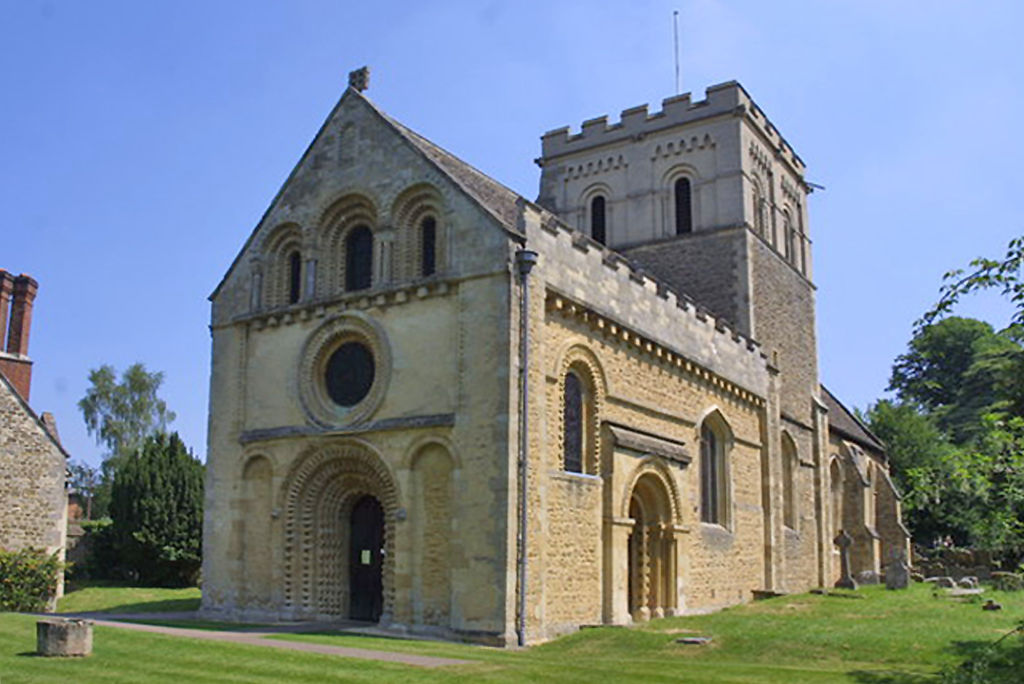
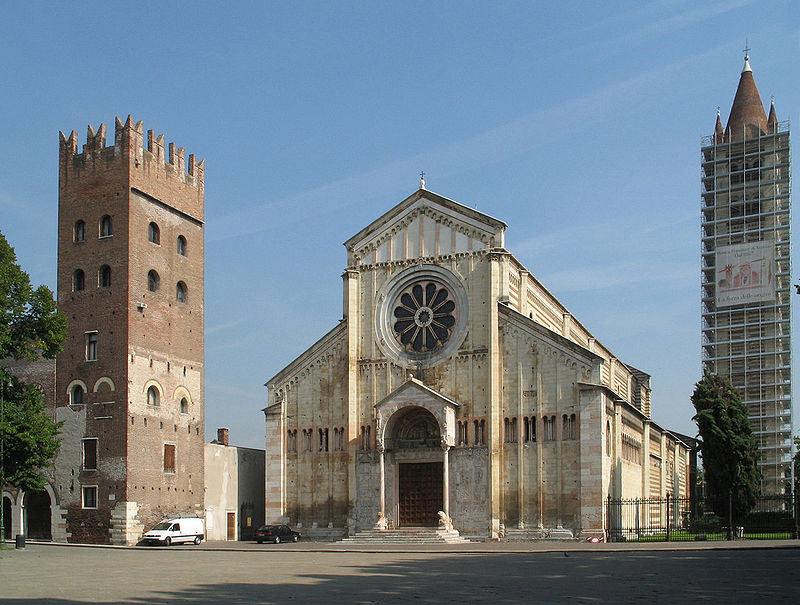
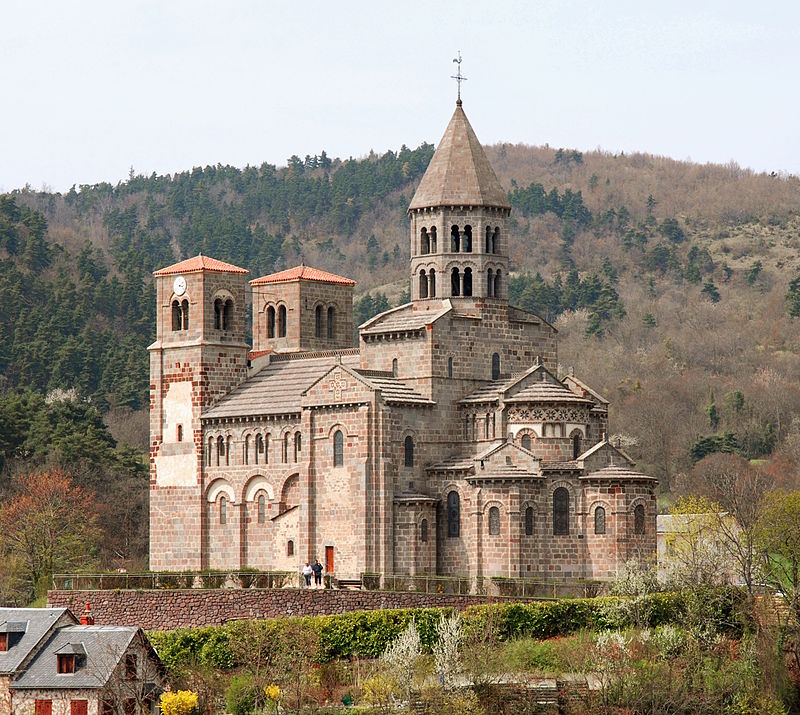
It was the first time I’d been in this church, and I looked around with curiosity. Like many religious buildings in this part of France, Saint-Lucien’s house of worship was already ancient in 1590.
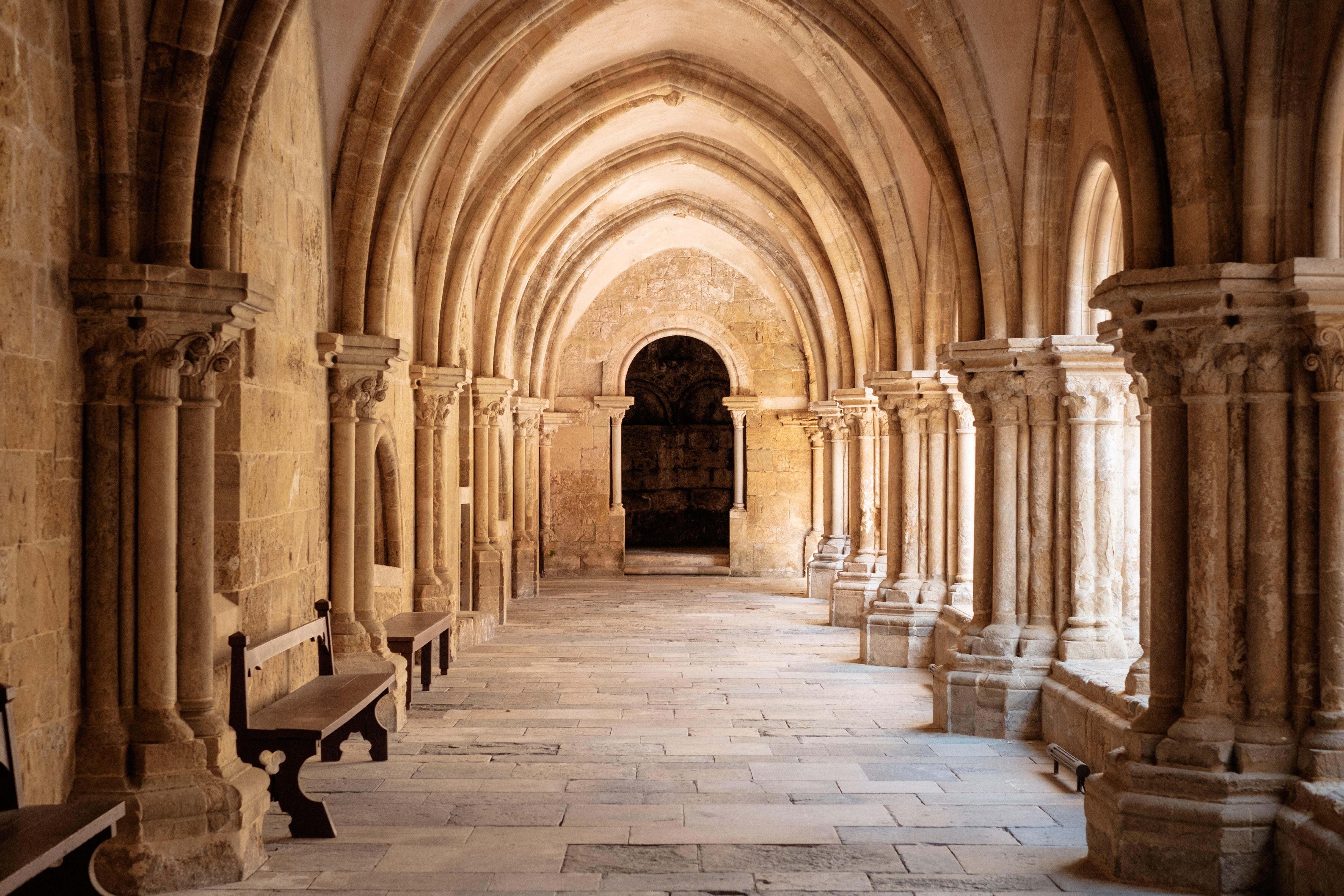
The Auvergne has a rich religious history — it is home to a series of famous Romanesque churches like the one described in Saint-Lucien and served as the site of the Council of Clermont that led to the First Crusade in 1095. Romanesque architecture is characterized by semi-circular arches. The arches derive from the Roman style; after the fall of the Roman Empire, architects and builders lost many of the techniques required to build large vaulted spaces and domes, but the rounded arches survived. The Romanesque style is one of the first architectural styles to span all of Western Europe — you can find diverse examples of the style from Italy to Poland to Scotland and Spain.
Jaca Cathedral, Spain
In the Real-Time Reading Companion, Deb reveals that the inspiration for Matthew’s church is the church of Sant’Apollinare in Classe, Ravenna, Italy.
Sant’Appollinare is “the most impressive Basilica of the Early Christian period.” Constructed in the 6th century, Sant’Apollinare is dedicated to the patron saint of Ravenna and was consecrated in 549. The most notable feature of the church is its rich collection of mosaics, which range from the 6th to 12th centuries. If you’re interested in a video tour of the mosaics, you can find one here.
High above there was a beating of wings. A dove had flown through the clerestory windows and lost its way among the exposed roof beams. It struggled, freed itself, and swooped down into the church.
The dove is a powerful symbol in many traditions. In Christianity, the dove symbolizes peace and the Holy Spirit (Matthew 3:16, Luke 3:22). In early Christian art, doves appeared as funerary symbols representing the eternal peace of the soul returned to heaven. In Judaism, the dove is a symbol of the people of Israel and a sign of life following the flood. In classical mythology, doves are associated with Aphrodite and may be considered as symbols of love. In the text of Shadow of Night, the dove may symbolize redemption, or hope, or the promise of renewed faith. We discussed the dove and the church extensively in Episode 24, The Trauma Express. The Daemons discussed Chapter 10 of Shadow of Night in Take 34! The One With the Baggage.
We’ll see you next on 5 December, when we have to see to some things in a certain hay barn.
Do you have questions, comments, or thoughts about the Real-Time Reading? You can e-mail us at chamomileandclovecast@gmail.com, follow us on Twitter @chamomilenclove, or find us in our Facebook group, the Chamomile & Clove Clovers. We can’t wait to hear from you.










 Chamomile & Clove